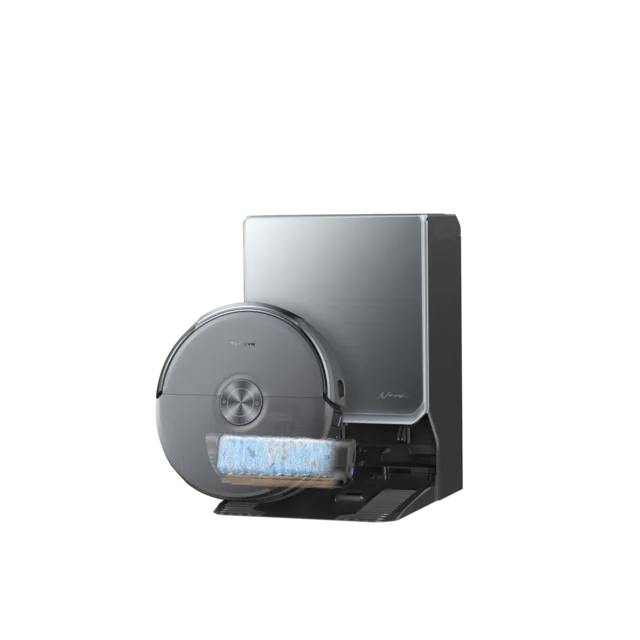
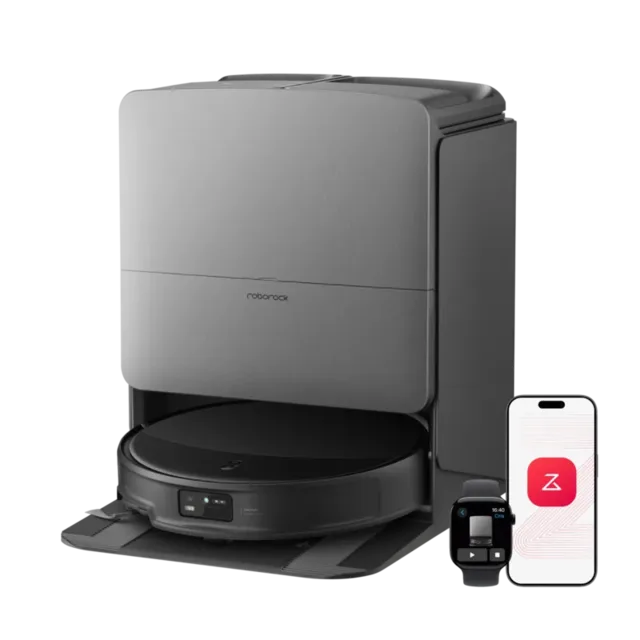
- Price N/A
- Weight Not officially disclosed
- Battery Life 7,000 mAh battery (up from 6,400 mAh on original Flow)
- Max Speed Not disclosed
- Status Available
- Category Cleaning
Capabilities
Shortlist up to four robots, pressure-test the real tradeoffs, and keep the comparison dense enough to scan fast on mobile, laptop, and 4k.
ui44 tracks pricing, status, connectivity, sensors, and capability differences in one place so you can stop bouncing between four product pages just to answer one buying question.
Compare workbench
Pick up to four robots. The best comparisons match job type, price band, or environment — then let the table surface the real gaps.
The dense table below is live. Swap robots anytime without leaving the page.
Share this comparisonComparison workspace
The table expands across desktop, stays dense on mobile, and highlights the strongest numeric values so the real tradeoffs are easy to spot.
Capabilities
Capabilities
| Spec | ||
|---|---|---|
| Price | N/A | $1,600 USD |
| Height | Not officially disclosed | ~7.98 cm (3.14 in) |
| Weight | Not officially disclosed | Not officially disclosed |
| Battery Life | 7,000 mAh battery (up from 6,400 mAh on original Flow) | Up to 190 minutes |
| Charging Time | Not officially disclosed | Not officially disclosed |
| Max Speed | Not disclosed | Not disclosed |
| AI | Narmind Pro with Omni Vision AI (VLA model); unlimited object recognition via on-device processing and cloud learning; adaptive risk-based obstacle avoidance | StarSight Autonomous System 2.0; 300+ object type recognition; VertiBeam lateral avoidance |
| Sensors | Dual 1080p RGB Cameras (136° FOV), Narmind Pro Autonomous System, Omni Vision AI (VLA model / NarGPT), Cliff Sensors, Carpet Detection | Embedded 3D ToF LiDAR (StarSight 2.0), VertiBeam Lateral Obstacle Avoidance, RGB Camera, Cliff Sensors |
| Connectivity | Wi-Fi, Narwal App (iOS / Android) | Wi-Fi, Bluetooth |
| Voice Assistants | None | Amazon Alexa, Google Assistant, Siri |
| Status | Available | Available |
| Category | Cleaning | Cleaning |
| Manufacturer | Narwal | Roborock |
Capability matrix
Use this grid when the shortlist is already close and feature gaps become the real tiebreaker.
| Capability | Flow 2 | Saros 20 |
|---|---|---|
| 131°F (55°C) Warm-Air Mop Drying | — | ✓ |
| 140°F (60°C) Heated Onboard Mopping Water | ✓ | — |
| 212°F (100°C) Hot-Water Mop Washing | — | ✓ |
| 31,000 Pa Suction | ✓ | — |
| 36,000 Pa HyperForce Suction | — | ✓ |
| AdaptiLift Chassis 3.0 (wheel lifting + climbing arm) | — | ✓ |
| Adaptive Risk-Based Obstacle Avoidance | ✓ | — |
| Auto Mop Washing (158°F / 70°C heated water) | ✓ | — |
| Auto Water Refilling and Drainage | ✓ | — |
| Baby Mode (auto-quiet near cribs, toy detection) | ✓ | — |
| Boiling-Water Self-Cleaning Sterilization Cycle | ✓ | — |
| Double-Layer Threshold Crossing (up to ~3.46 in / 8.8 cm) | — | ✓ |
| Dual Anti-Tangle Brush System | — | ✓ |
| Dual Rotating Mop Pads with Auto-Lift | — | ✓ |
| Dual-Flow Tangle-Free Brush | ✓ | — |
| Dynamic Carpet Height Adjustment (up to 1.18 in / 3 cm pile) | — | ✓ |
| Extendable Mop Pad for Edge Cleaning | ✓ | — |
| FlexiArm Edge Mopping (toe-kick spaces from 0.79 in / 2 cm) | — | ✓ |
| FlowWash Track-Style Roller Mop | ✓ | — |
| Hot Air Drying | ✓ | — |
| Multi-Floor Mapping | ✓ | ✓ |
| Narmind Pro Navigation with Dual RGB Cameras | ✓ | — |
| Optional Auto Refill and Drainage Integration | — | ✓ |
| Pet Location Scanning and Pet Zone Deep Clean | ✓ | — |
| Reusable Dust Bag (up to 120-day capacity) | ✓ | — |
| RockDock Auto Dust Emptying (2.7L bag, up to 65 days) | — | ✓ |
| Self-Emptying | ✓ | — |
| Smart Pet Companion Mode (video call, voice packs) | ✓ | — |
| Smart Valuables Guard (jewelry, keys, phone alerts) | ✓ | — |
| StarSight 2.0 Navigation (300+ Object Recognition) | — | ✓ |
| Vacuuming and Mopping | ✓ | ✓ |
| VertiBeam Lateral Obstacle Avoidance | — | ✓ |
This route works best when it behaves like a dense research workbench, not a marketing page. Use this flow to get to a clean shortlist fast.
Start with robots that solve the same job. Use category anchors like Humanoid, Research, Cleaning, Commercial before you worry about micro-spec wins.
Check price, status, battery, sensors, and capabilities before getting lost in minor spec rows.
Once you have a shortlist, hide shared rows. That turns the table from a spec dump into a real decision tool.
These are the sensor rows that usually change real-world navigation, awareness, and operating confidence the fastest.
Strongest signal for distance measurement and mapping. Robots with LiDAR usually navigate more confidently in cluttered homes.
RGB cameras help with object recognition while depth cameras add 3D awareness for trickier rooms and obstacles.
Critical for balance, motion tracking, and orientation — especially on bipeds and quadrupeds.
Useful for close-range obstacle detection and transparent surfaces that other systems can miss.
A dedicated cleaner versus a home assistant with cleaning features can reveal whether you really need a specialist or just broader household coverage. The key is comparing around the same outcome, not the same marketing language.
Two route mechanics matter more than they look: checking the home-stack fit early and keeping a shareable URL once the shortlist gets good.
If your home already runs on Alexa, Google Home, or HomeKit, compare connectivity rows early. Smart-home fit kills more shortlists than raw spec gaps.
Every live comparison gets a shareable URL. Send it to family, teammates, or forums without rebuilding the exact robot combination later.
Use a prebuilt pairing when blank-page friction is the problem. Open one, swap robots, and keep moving.
Price bracket check — Roomba Max 705 Vac versus Rover X10 shows what the premium tier actually buys in navigation, maintenance, and smart-home polish.
Same-brand shortlist — Go2 versus Unitree H2 isolates whether the higher tier actually changes the ownership story.
Mobility platforms — CyberDog 2 versus Go2 is a fast way to compare payload, stability, and commercial ambition inside the quadruped category.
Home presence check — Miko Mini versus LOVOT reveals how much extra presence, hardware, and ecosystem you buy as companion robots move upmarket.
The comparison workspace should feel fast, but the underlying data still needs to hold up when the shortlist gets expensive.
ui44 comparison rows are built from official manufacturer specs and rechecked as models change, so the compare table stays aligned with robot detail pages.
Model updates and mid-cycle refreshes stay in separate entries where needed, which makes old vs new comparisons trustworthy instead of muddy.
Commercial or enterprise platforms may show Inquiry instead of a retail price, but the rest of the comparison table remains visible so you can still judge fit.
Once the shortlist is live, use a wide-screen decision framework that turns comparison rows into an actual recommendation — not just more reading.
Not all spec deltas matter equally. A small price gap might be decisive for one buyer and irrelevant for another, so rank the buying criteria before you crown a winner.
A robot that is slightly better on many low-priority specs but loses the one thing you actually care about is still the wrong buy. Let your shortlist carry the context, not just the color highlights.
The sticker price is only one row. Consumables, warranties, service access, and subscriptions often decide whether a premium robot is actually the cheaper long-term choice.
Cloud AI, remote monitoring, and premium app tiers can make a cheaper upfront robot more expensive over three years.
Brushes, mop pads, filters, bags, or blades can flip the value story fast — especially on high-frequency cleaning robots.
Large batteries and frequent charging are not huge costs alone, but they do reveal how demanding the robot will be in everyday operation.
Local servicing, spare-parts access, and brand support quality are often the quietest but most important long-term cost rows.
Specs describe ideal conditions. Your rooms, furniture, floor transitions, pets, and Wi-Fi coverage determine what actually performs well in the real world.
Tiebreaker layer
If two robots are still neck-and-neck, use softer signals that affect ownership quality more than spec sheets admit.
Return policy
Risk-free trials reduce the cost of choosing wrong.
User community
Strong forums and owner groups add support after purchase.
Ecosystem
Complementary products from the same brand can compound value.
Aesthetics
Robots you actually like living with get used more often.
Comparison FAQ
Short answers to the questions that usually show up once the shortlist is live and the tradeoffs feel real.